This got converted into a somewhat different blog post: On bike helmets and acts of defiance.
———————–
First time out to try my new ebike, a couple years ago now, I had to be reminded to put on a helmet.
Ugh, I thought. Is this really necessary. I mean, we were just going to go down the street to practice in parking lot.
And helmets. Uncomfortable. Hot. They mess up your hair.
But you know, I did wear it. It was my first time on a bike in a while, and wasn’t really sure how the e- part of it worked. Even in a parking lot, it was at theoretically possible that I could fall off and bump my head. I’m pretty fond of my head, and of the brain within it, so…
I’m many bike rides past that point now, and I just always wear the helmet without really thinking about it. I don’t really thinking about how risky the particular route I’m taking that day is (narrator: it’s never that risky), how busy the traffic is apt, the weather conditions.
It’s just the activity. I’m riding a bike. Ergo, I’m wearing a helmet. I no longer find it particularly uncomfortable or hot, and I can always just comb my hair afterwards.
Looking around me at other riders, I’m hardly alone in this choice. I’d say about 80% of riders wear a helmet? Along with a good majority of e-scooter riders, roller bladers, skateboarders…
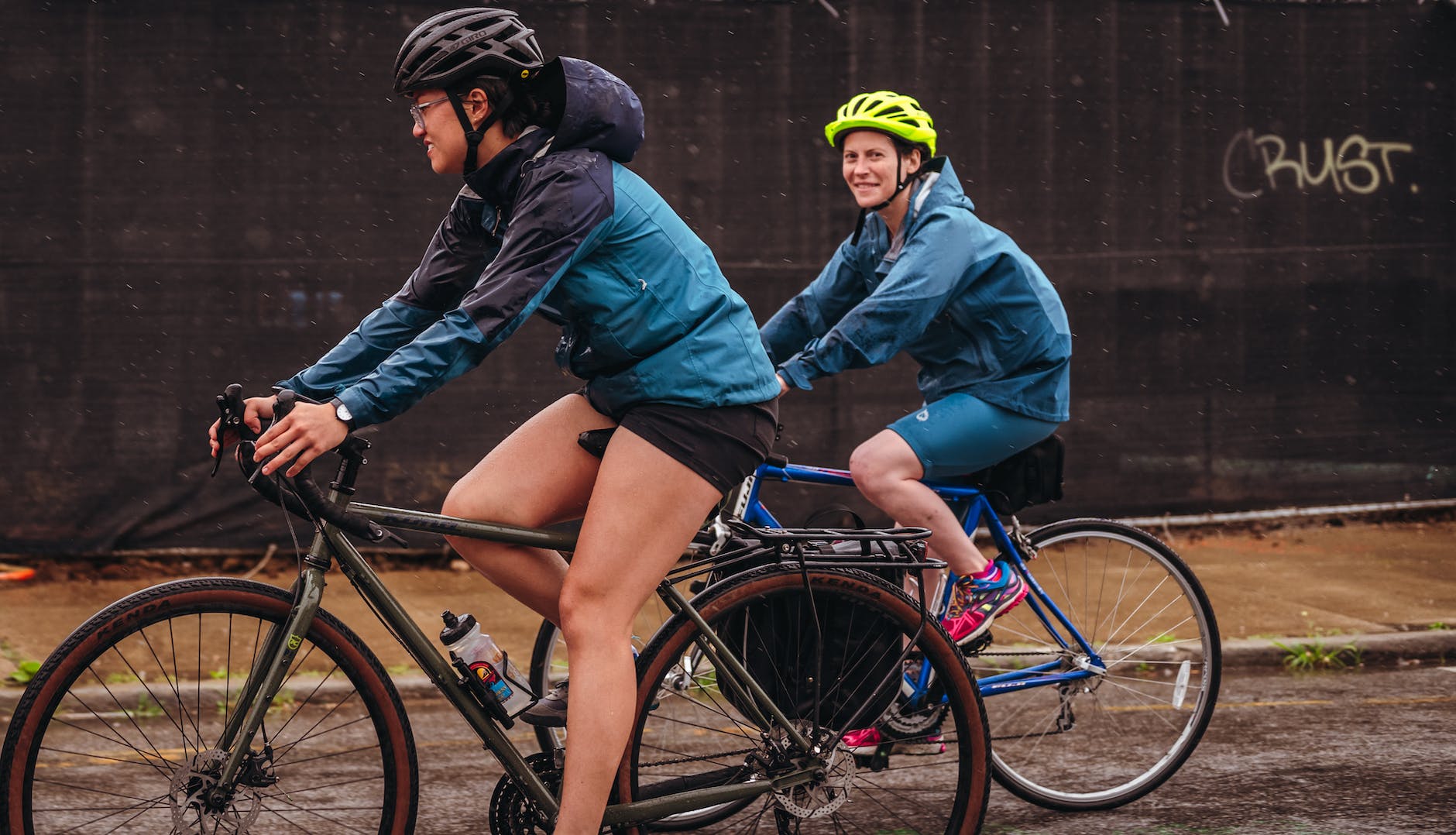
As part of writing this, I had to look up whether it is the law to do so, and… it is not.
It’s just something our society has decided is a sensible precaution, so most people follow it most of the time, regardless of the actual percentage risk of falling off your bike and bumping your head.
Nobody looks at you like a paranoid weirdo for wearing a helmet when you’re riding a bike.
Nobody gets angry at you about it.
There are no questions about why you’re doing it.
About whether you will do this forever.
About what level of societal brain injury or concussion could be low enough for you to consider not longer wearing a helmet.
No one tries to tell you that helmets don’t work.
No one says that falls are inevitable, and that there’s no point in trying to protect yourself from them.
What is up with mask messaging?
If you haven’t figured it out yet, here I’m comparing helmet wearing, which is not required but the majority of cyclists nevertheless do, and masking, which is also not required but hardly anyone does anymore.
I think the main reason is political and public health (of course, public health is political, especially in Canada—public health officials aren’t independent at all) messaging. They could have gone with messaging that truly encouraged everyone to continue masking, even if they no longer wanted to keep it mandatory.
They could have presented masks as what they are, a great tool that allows you to do many activities without sick.
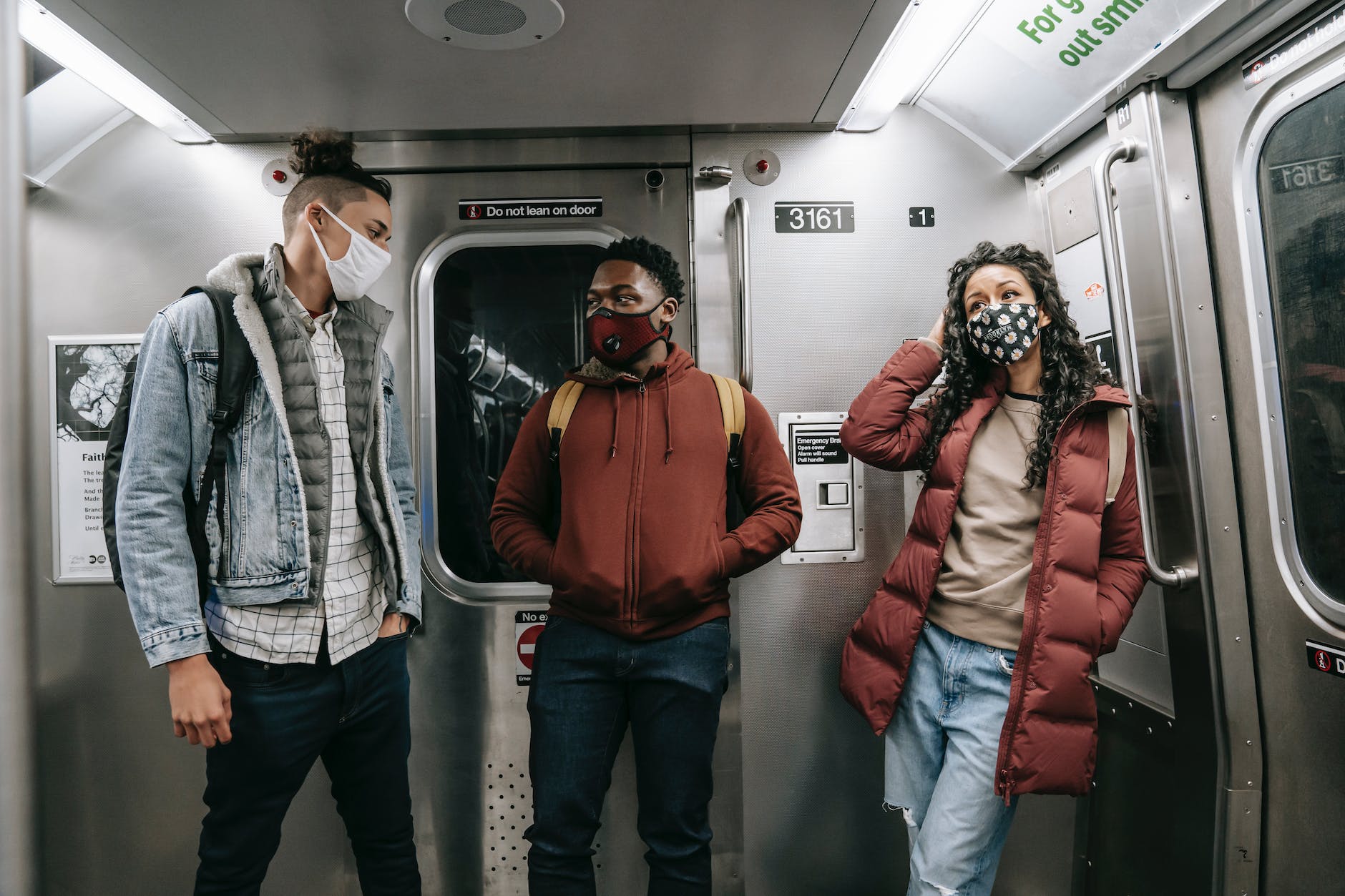
They could have supported actual mask production. Gave them away free. Made them fun (i.e. available in more than plain black and white or maybe blue if you’re lucky). Developed recycling options for them. Encouraged use of reusable ones (elastomerics).
They didn’t do any of that.
Because ongoing masking would make it seem that Covid was still a problem, and then they might have some pressure to do something about it. And they’d really rather not do anything about it.
Breaking it down
Mask messaging, of course, changed a lot from March 2020 to March 2022 (the final message, so far). And much of it has been abysmal, as reported in A behavioural psychiatrist explains why Canadians aren’t wearing masks. The educational component was missing; they were largely treated as a punishment instead of as empowerment; and masks as a symbol of social community was eroded.
Let’s look at that final message from Public Health, the one that has basically stuck (and has, over time, resulted in almost no one masking). Basically it’s this:
- You can wear a mask to protect yourself.
- Masking is recommended for people at risk of severe outcomes from Covid, such as those over 65 and the immunocompromised.
- Everyone’s choices on masking need to be respected.
Let’s dig into point in turn.
Can you protect yourself with a mask?
Well, it depends.
First of all, on who you are.
If you are a toddler or baby too young to mask, or someone with a mental or physical disability that makes masking impossible, then no, you cannot protect yourself with a mask.
If you are immunocompromised—part of that very group highlighted as one that ought to protect themselves by wearing a mask—it’s harder. Because your condition means you can get sick much more easily than others, from (presumably) exposure to a much smaller viral load. Even a well-fitted N95 can let in a very small amount of viral particles, which might be enough to infect you.
But even if you can mask, and your immune system is not compromised, being the only one masked in a group never as effective as being part of a mostly masked group. Masks—all masks—work better at keeping virus out of the air than at stopping virus from getting into your airway.
In other words, your mask-wearing protects others better than it protects yourself.
Now, I realize this part could make people be even less likely to mask, which is the opposite of my intent, so please keep in mind:
- In lower-risk settings, such as a well-ventilated, relatively uncrowded grocery store, even somewhat half-assed masking will likely be enough to protect you from the fairly minimal amount of virus in the air.
- For higher-risk settings like an airport security line or an ER waiting room: N95s are amazing, and elastomerics are even better, so with these you have a fighting chance. See Mask buying guide.
- Consider the bike helmet. Wearing one will likely protect you from cracking your head open, but still you might end up with a concussion. People know this, but wear them anyway, not letting perfect be the enemy of good. Kind of same with masks—wearing one should still reduce your viral load, so even if you do get infected, the disease might not affect you as badly.
Is it only the elderly and immunocompromised who are at risk from Covid these days?
There are different types of risks from Covid, so we need to take them in turn.
Risk 1: Acute Covid
That sickness you get a few days after infection—that’s acute Covid. And it’s the only risk Public Health tends to talk about.
It’s indeed true that the elderly and immunocompromised are much more likely to die from Covid than other vaccinated people are. They’re also, naturally, more likely to be hospitalized. Less well-known? Children ages 0 to 5—an undervaccinated group, a group with obvious difficulties masking effectively—are also at quite high risk of hospitalization. They don’t die that often, thankfully, but what parent wants their little ones to go through this much trauma?
And even slightly older kids aren’t doing so great on this front lately, at least relatively (Covid being the only respiratory disease widely circulating right now):
But you know, just because you didn’t go to hospital doesn’t mean acute Covid didn’t cause you any problems. Sure, there’s a significant contingent who are asymptomatic or mildly symptomatic—but also quite a few who get really sick, and sometimes for a surprisingly long time. Apart from being highly unpleasant, this can be mightily inconvenient.
Even if you don’t regularly mask in crowded indoor spaces, why isn’t routine for everyone to resume doing so in the 10 days before a big event in their live—vacation, concert, wedding, big job interview, award ceremony, family reunion, whatever it is? Seems stupid not to, yet I keep hearing about people, say, flying to their dream destination maskless, then spending the whole time in their hotel room, too sick to do anything but lie there and suffer.
Risk 2: Post Covid condition, aka Long Covid
These are symptoms that either linger or newly develop after the acute phase of Covid, and stick around for at least 8 weeks. There’s a whole constellation of them, the most common of which is fatigue, but includes muscle pain, tinnitus, loss of taste or smell, headaches, depression, anxiety, “brain fog”, insomnia, cough, shortness of breath… The severity can range from mildly annoying to completely debilitating.
“An estimated 1 in 10 infections results in post #COVID19 condition, suggesting that hundreds of millions of people will need longer-term care.”
Dr. Tedros, World Health Organization, April 26, 2023
Is this 10% right? There are different data points from different studies; for example:
In Canada, as of August 2022, more than 1.4 million people – or about 15 percent of adults who have contracted COVID-19 – say they experience symptoms three months or more after their initial SARS-CoV-2 virus infection. These include respiratory, cardiovascular, neurological and cognitive impairments, and they can be debilitating.
Government of Canada, Long Covid Task Force, March 2023
There’s some credible suggestion that the incidence is decreasing over time, to maybe 5%.
But whatever the current odds, there is agreement on this:
- Post Covid condition is real.
- Post Covid condition is not rare. It’s magnitudes more common than death from acute Covid.
- There is no cure for Post Covid condition. (Although some people do recover, eventually.)
- Getting treatment for Post Covid condition is difficult.
Importantly, Post Covid condition is not largely limited to the elderly and immunocompromised. It affects people of all ages and all health statuses. There is no test that will tell you if you’re susceptible to it or not. And just because you didn’t get Post Covid condition after your first (or second) Covid infection, doesn’t mean you won’t get it after a subsequent infection.
Everyone is at risk of Post Covid condition.
Risk 3: Increased risk of other illness
So you got through acute Covid, you don’t have lingering fatigue, aches, or other nagging symptoms. So you’re good, right? Well…
COVID-19 Surges Linked To Spike in Heart Attack Deaths – “Like Nothing Seen Before”: New study shows heart attack increase has been most prominent in young adults, especially those ages 25-44.
Heart-disease risk soars after COVID — even with a mild case: Massive study shows a long-term, substantial rise in risk of cardiovascular disease, including heart attack and stroke, after a SARS-CoV-2 infection.
The covid-19 virus gets into the brain – what does it do there? We now know that covid-19 can cause neurological symptoms, ranging from brain fog and headaches to strokes.
Previous COVID infection linked to lower brain oxygen levels, cognitive problems: study
SARS-CoV-2 infection causes immunodeficiency in recovered patients
I could go on, but it is pretty depressing. Anyway, the CDC summed it up pretty well:
“The virus that causes COVID-19 can have lasting effects on nearly every organ and organ system of the body weeks, months, and potentially years after infection. Documented serious post-COVID-19 conditions include cardiovascular, pulmonary, neurological, renal, endocrine, hematological, and gastrointestinal complications, as well as death.”
Center for Disease Control (CDC), February 2023
Once you’ve had Covid, you’re at increased risk of having all kinds of other unpleasant diseases. Even you’re young and previously health.
Everyone is at risk from Covid.
To mask or not to mask: Are both choices equally respectable?
Look, I certainly don’t want us fighting in the streets or even just getting cross with each other over masking.
But to suggests that both choices are equally valid on social level is simply wrong.
Choosing to mask in crowded indoor settings is the better choice.
It’s kinder.
It’s smarter.
It’s safer.

People who mask are helping to break the chains of transmission of a really unpleasant disease.
People who do not mask are either putting themselves at risk of infection or are actively infecting others.
The masked are trying to make things better. The unmasked are not. That’s it.

But how much Covid is around now, anyway?
Yeah, it’s been declared no longer an emergency. Hospitalization rates are trending down a bit.
But if you look at the only real measurement we have these days, wastewater… This is from Kitchener, but it’s likely similar across Ontario…
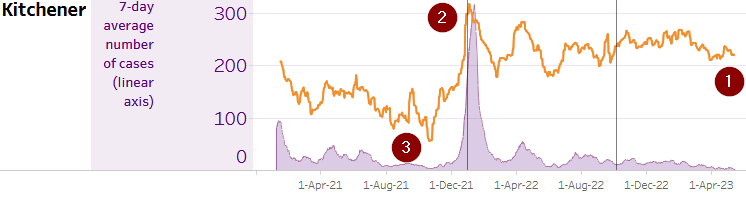
Note that the current incidence (1) is much closer to pandemic peak (2) than to the lowest point on this graph (3)—which is not even the lowest point of the pandemic—when everyone was still wearing a mask! In fact, we’ve been steadily above 2021 levels for 1.5 years now.
So yeah, there’s still lots of Covid out there.
And you know what? Masks also protect you against other things: other airborne diseases, allergens, even wildfire smoke.
People, I haven’t had a respiratory disease of any sort in 4 years now. It’s wonderful.
And you think masks will solve everything?
Did I say that? I don’t think I said that.
Consider the bike helmet. I wear it, it helps keep me safe, but far more important to my biking safery is:
- The network of safe bike lanes I can ride on in my community.
- The design of my “fat tire” ebike, which makes it very stable.
- The addition of lights and mirrors to my ebike to make it easier for me to see and be seen.
- My choices when riding—the route I take, the rules I follow, the vigilance I have
Masks are a tool. I feel they are an important and useful tool, and I think it’s terrible that the political (and therefore Public Health) decision was to message them in such a way as to guarantee that almost no one wears them anymore.
But they have their limitations. Not everyone can wear them. Nobody can wear them and eat—we all gotta eat, and eating it a big part of socialization. Wearing them when sleeping maybe isn’t impossible, but is definitely far from ideal. They can be hot, they can uncomfortable, they can look kind of goofy. (Yeah, like a bike helmet!)
So, like, if I were in charge of pandemic management, I would definitely tried to normalize rather than demonize mask use. For sure. But I would also favor approaches such as:
- Improving ventilation and filtration in public buildings, starting with schools and long-term care homes.
- Replacing current hospital IPAC (infection prevention and control) staff with people who recognize that Covid is airborne, and would act accordingly.
- Ensuring that every worker has at least 10 paid sick days, so they can stay home when sick.
- Investing in research on better vaccines: ones that prevent infection (not just severe effects), last longer, cover more variants.
- Providing more clinics and more treatment options for people with post Covid condition.
- Making infection risk part of the in-office / remote discussion, a factor to be considered there, along with productivity, team work, health of city down towns, company culture, the economy.
- Stop lumping Covid in with flu, given that Covid isn’t seasonal, has much more severe long-term effects, is way more transmissible, and has vascular effects that flu doesn’t.
But until we have these amazing vaccines or treatments, or some other means of greatly reducing transmission, masks need to stay in the mix.
I’m telling you all now – and believe me, I want to be wrong – that if we don’t slow transmission of this virus and develop new treatments and second generation vaccines, the damage we are allowing to occur to the health of our global population – not just the elderly, the disabled, the vulnerable – but everyone, well, that damage is unsustainable. And the vast majority of that population don’t understand the risk, because they haven’t been given the information.
Conor Browne, bio-risk consultant specializing in Covid-19 forecasting
 Cultureguru Archive